

In August 2023, Singapore police raided homes across the city-state and arrested 10 foreign nationals in what became the country’s largest ever money-laundering investigation. Assets eventually worth more than Sin$3bn (£1.75bn) – including property, cars and luxury goods such as jewellery, watches and handbags – were seized, frozen or made subject to disposal orders.
The case dominated headlines in Singapore and across Asia, though it received comparatively little coverage in the UK.
Now some of the forfeited items are heading to auction. Deloitte Singapore was appointed by the Singapore Police Force to manage disposal of the assets, and after running a tender process handed the luxury goods to Hotlotz, a homegrown Singaporean auction house.
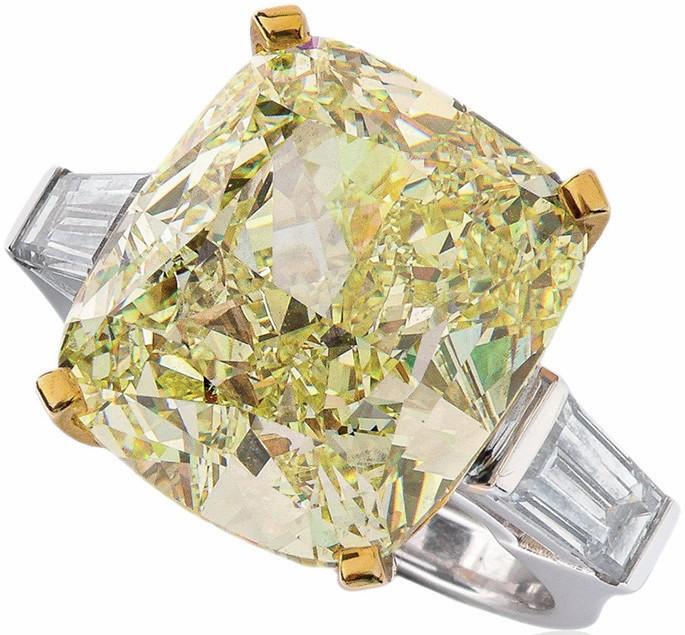
A cushion modified-cut fancy yellow diamond ring of 15.02cts, with tapered white diamonds to the shank, in white and yellow gold. Estimate: Sin$200,000-300,000 at Hotlotz.
Under the banner Hotlotz Fine, the firm is running a series of 15 timed online sales starting this month and running into next spring, covering handbags, jewellery, watches, wine and spirits, and collectables – thousands of lots in total, with a combined estimate running into the millions of Singapore dollars.
ATG spoke to Hotlotz founder and chief executive Matthew Elton about how the consignment came together, the scale of the task and what bidders can expect when the first sales open.
ATG: When did discussions about the consignment start?
Matthew Elton: We started talking to Deloitte in 2024, and then completed a tender process. About three months ago we found out that we had been appointed.
What does it mean, in your view, that a homegrown firm won it?
I think it’s great that a Singaporean firm won this job. It’s a Singapore story at the end of the day, and this story has been very closely followed here. I feel it’s right that these auctions should be held in Singapore, but equally that to ensure fair market prices are achieved, that the world should have the opportunity to bid. The great thing about being a digital-first auctioneer is that we can reach all corners of the world.
What do you think tipped it in Hotlotz’s favour?
I think we’ve been chosen because of our transparency and our accessibility. We are not hiding the fact that these items have been forfeited, but we are applying much higher standards than you might !nd in other sales of this nature, and we have the platform to take this sale to the world.
Beyond that, we have almost a dozen years under our belt in Singapore – next spring we’ll celebrate 12 years operating here. We hold sales across all of the major asset categories featured; watches, jewellery, handbags, luxury collectables, and wine and spirits, and there isn’t another auction house in Singapore with that depth of coverage. The major international houses that people might expect to handle this kind of consignment don’t have selling operations in Singapore, they have reps here, but they typically export items into their Hong Kong, London or Geneva sale rooms.
We’ve also built our reputation over 12 years with some high-profile results, our Peranakan porcelain sales have broken the world record several times over, which resonates strongly here. We also hold the record for any object sold on thesaleroom.com, and in early August we sold Singapore’s founding prime minister’s Lee Kuan Yew’s pen for a really excellent price (ATG No 2758), which was very well received.
How does this compare, in scale, to anything Hotlotz has handled before?
This is a large job, but to be fair this would be a large job for any auction house, anywhere in the world. It is large for us, but we have the processes, the platform and the people in place, along with the energy and ambition to do it justice. Our job is to deliver this sale in the best way possible, and to genuinely test the market globally to determine the fair price of these objects.
We have been appointed by Deloitte, an auditing firm, and in turn they have been appointed by the Singapore Police Force, so we have been very focused on our processes.
For example, this has allowed us to really innovate and to showcase our capabilities in technology. Our bidder identification and KYC/ KYB verification process are really cutting-edge. Singaporean bidders will be able to register for sales using ‘SingPass’ – the digital government ID card system, with their information verified immediately against the government’s records; this is the first time it has been used for an auction.
International bidders can verify online, using a mixture of passport checks, proof of address checks, two-factor authentication and selfies!
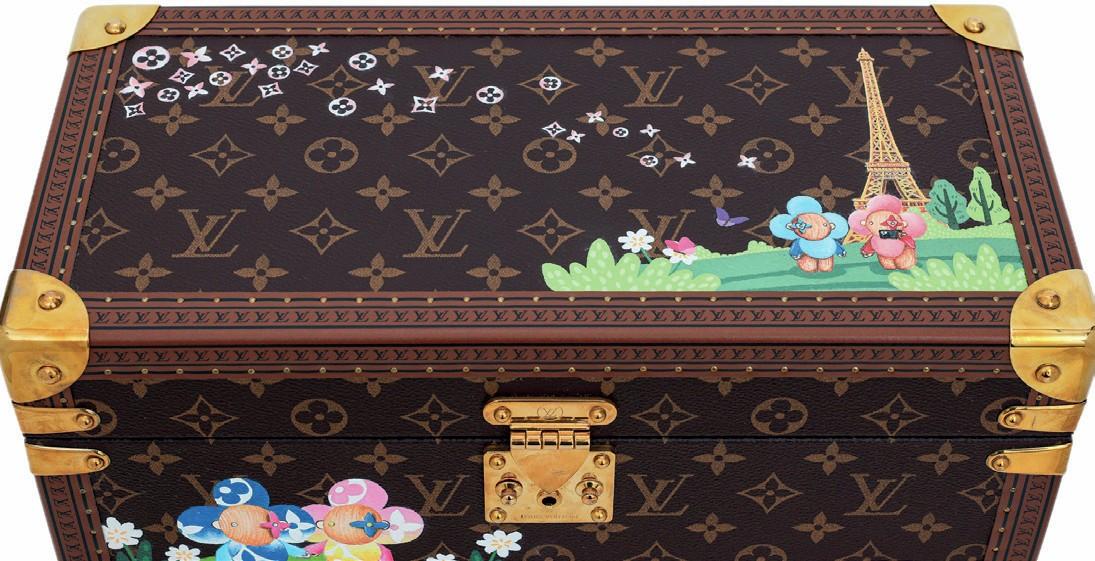
Louis Vuitton customised coffret joaillerie in monogram canvas, featuring gold-tone brass hardware, a pink-lined compartmentalised interior with removable trays, watch cushions and jewellery fittings, and hand-painted floral and Eiffel Tower motifs. Estimate: Sin$4000-6000 at Hotlotz.
Hotlotz has been perhaps best known for its ceramics sales – does this mark a deliberate move into luxury goods, or is it a one-off?
I don’t think of us as moving into luxury. We’ve been selling a lot of designer fashion, handbags, high-quality branded homewares and jewellery for many years. We hold a monthly fashion sale, a monthly jewellery sale and a monthly interiors sale, all of which are full of what you might call ‘luxury’ items.
Singapore is one of the major global centres for luxury in the world, and we’ve been successful in building a business around that.
Nor do I think it affects our ability to sell the other – more traditional – categories, Asian works of art, fine art, collectables, etc. They all support each other. I think that the Hotlotz brand is about trust and quality, and it’s very ‘stretchy’.
People will buy a handbag one week, and then a picture the next. Our job isn’t to tell people what to buy, but more to give them a range of choices, all backed by our valuation team’s appraisal. So it’s not a move into luxury, we’re already firmly there. But these sales are definitely at the upper echelons of that market!
What extra resource have you brought in to handle a consignment of this size and sensitivity?
We’ve been scaling up the business for several years, and the team now stands at almost 30 full-time staff operating out of our Singapore saleroom. We’ve built considerable capacity in our technology and marketing teams, and – of course – we have a great (and busy) team of valuers led by Christopher Lanigan-O’Keefe. As the processing and exhibitions are on site at Le Freeport we have world class security in place.
For this consignment specifically, we’ve built a dedicated operation inside Le Freeport which is near to Changi Airport. We have a full team operating there, complete with a full gemmological lab and photographic studio, set up in the vault. All appraisal, authentication, cataloguing, valuation, condition checks, photography and marketing materials are produced inside the vault. We have a good in-house team of valuers and have managed most of this internally, bringing in external support for specific tasks where we felt it was necessary.
It’s also worth noting this consignment amounts to 15 sales over a nine-month period, we’d normally run 40–50 sales in that time anyway, so while it’s a lot of work, it’s within our usual capacity.

Hermès Kelly diamond bracelet. Signed, numbered and French hallmarks for 18k gold. Accompanied by Hermès Gemstone and Precious Metal certificate stating the 263 diamonds totalling 30.31cts. Estimate: Sin$150,000-200,000 at Hotlotz.
Tell us about the format of the sales
The sales are grouped under a single series called Hotlotz Fine. There will be 15 sales in total, running in September, November, January and April. The major reason for the scheduling was simply volume.
September features the two launch sales, ‘Luxury Handbags & Accessories’, and 'Fine Jewellery', both on September 7); November includes five sales: ‘Fine Jewellery Part Two’, ‘Hermès Handbags & Accessories, Part One’, ‘Fine Watches, Part One’, ‘Fine Wine, Part One’, and ‘Fine Spirits, Part One’. Previews of all these sales are online now. January 2027 brings Fine Wine & Spirits sales, offered ahead of Chinese New Year.
April brings the culmination of the series: ‘Hermès Handbags & Accessories, Part Two’, ‘Fine Watches - Part Two’, and a major collectables sale, including a significant collection of Bearbricks.
How do you approach estimates for goods with this backstory?
Broadly the same way we approach estimates for goods in any of our sales; benchmarking against comparable auction prices, reviewing scarcity, condition and completeness. We tend to not benchmark against original retail or fixed price secondary-market ‘sticker prices’ (which are typically discounted).
We’re selling these items transparently; the owner, Deloitte as agent, is listed in our ownership statement, so we’re not trying to draw attention away from the fact that these are forfeited items, but equally we’re not sensationalising that story. Our job isn’t to talk about the seizure, how the items were forfeited, or how we were appointed, none of that is relevant to our role. Our job is to process the items accurately, put them into sale transparently, reach the broadest possible market, and achieve the best price for our client, which is ultimately the Singaporean government.
What documentation do you have on these items, receipts, purchase records, and how much of that is being shared with bidders?
It’s a mixture, some items have documentation, some don’t. It will be a case of reading the catalogue to see what comes with each lot. Where packaging, receipts and certificates exist, they’ll be made available to the winning bidder in redacted form. To be clear, these items are not stolen, they’ve been forfeited from individuals who ran a money laundering syndicate, so they’re the personal items of those individuals.
As for whether that history attracts bargain hunters or puts o! status-conscious buyers, it’s possible, in different ways for different people. Some will be drawn to the sensational side of the story; others may hope to secure a good price because of the backstory.
These items do stand up on their own merits as incredible objects, so plenty of buyers may not be too concerned either way. We can’t really gauge individual bidder motivations or how the provenance will affect willingness to bid, but we’ll put these items into the market, and the market will – as it always does – decide the price.
What are the viewing arrangements to see the items in person?
Viewing is available only to bidders who have registered and completed identity verification. It takes place at Le Freeport in Singapore and is bookable through our website. We have five viewing slots a day, 45 minutes each, accommodating up to fifteen people per slot, on a first-come, first-served basis.
No-one can book speculatively, since booking requires registration and verification first. Full details will be available on our website.
We’ve set a special rate for this series of 20%, inclusive of GST, a reduction from our standard 30% buyer’s premium.
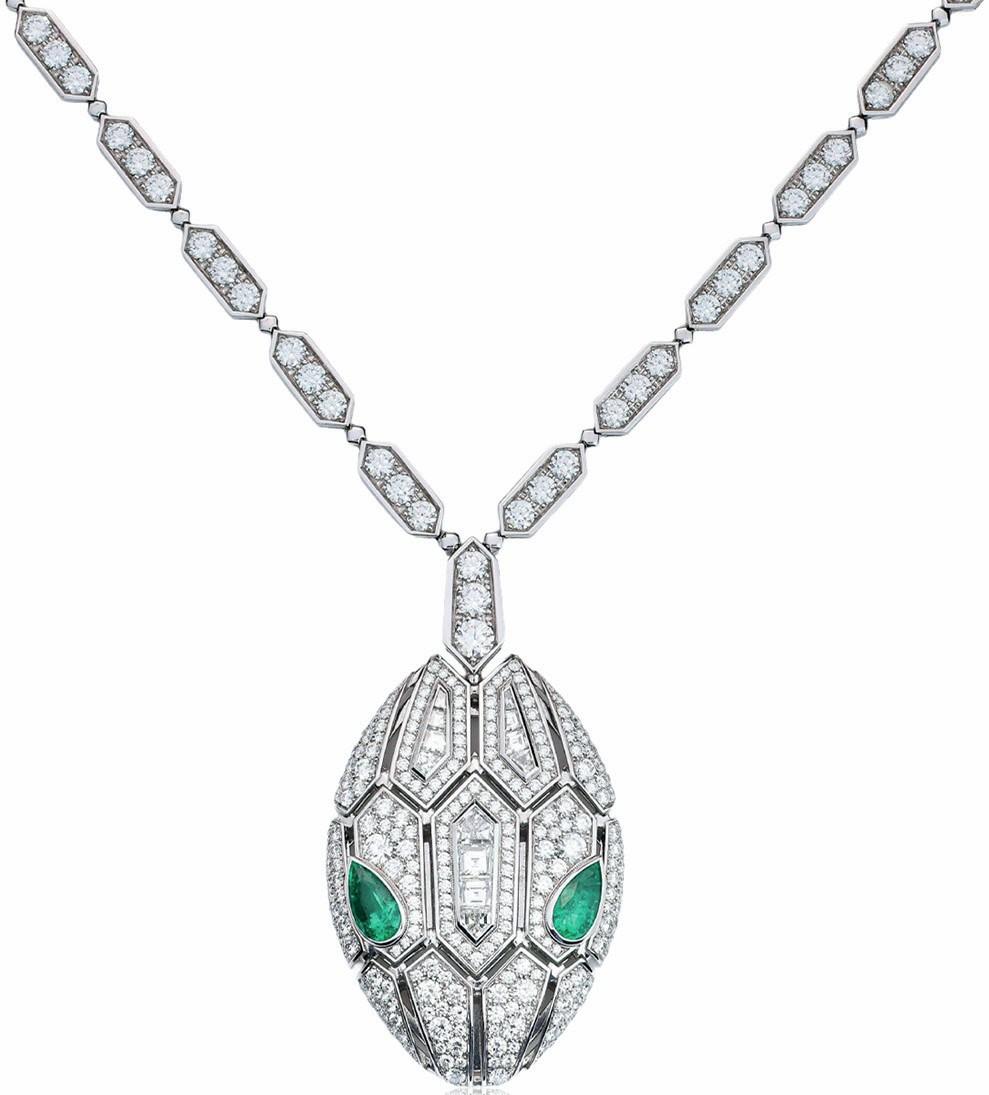
Bulgari emerald and diamond ‘serpenti’ necklace. Diamonds totalling approximately 15.0cts; the emeralds approximately 0.85cts. Estimate: Sin$60,000-80,000 at Hotlotz.
How are international shipping, customs and import tax on luxury goods being handled for overseas buyers?
There’s no collection available from Le Freeport itself, given the nature of the facility. Everything purchased is shipped. For the Singapore collection, this is handled by our last-mile delivery partner Temis Luxury at a flat rate of $65, regardless of the number of lots won in a sale.
For international buyers, we are working with Fine Art Logistics, based at Le Freeport, who will liaise with the winning bidders and create bespoke shipping solutions. Import tax and customs arrangements depend on the destination country and are always paid by the buyer, but Fine Art Logistics will be able to provide support.