
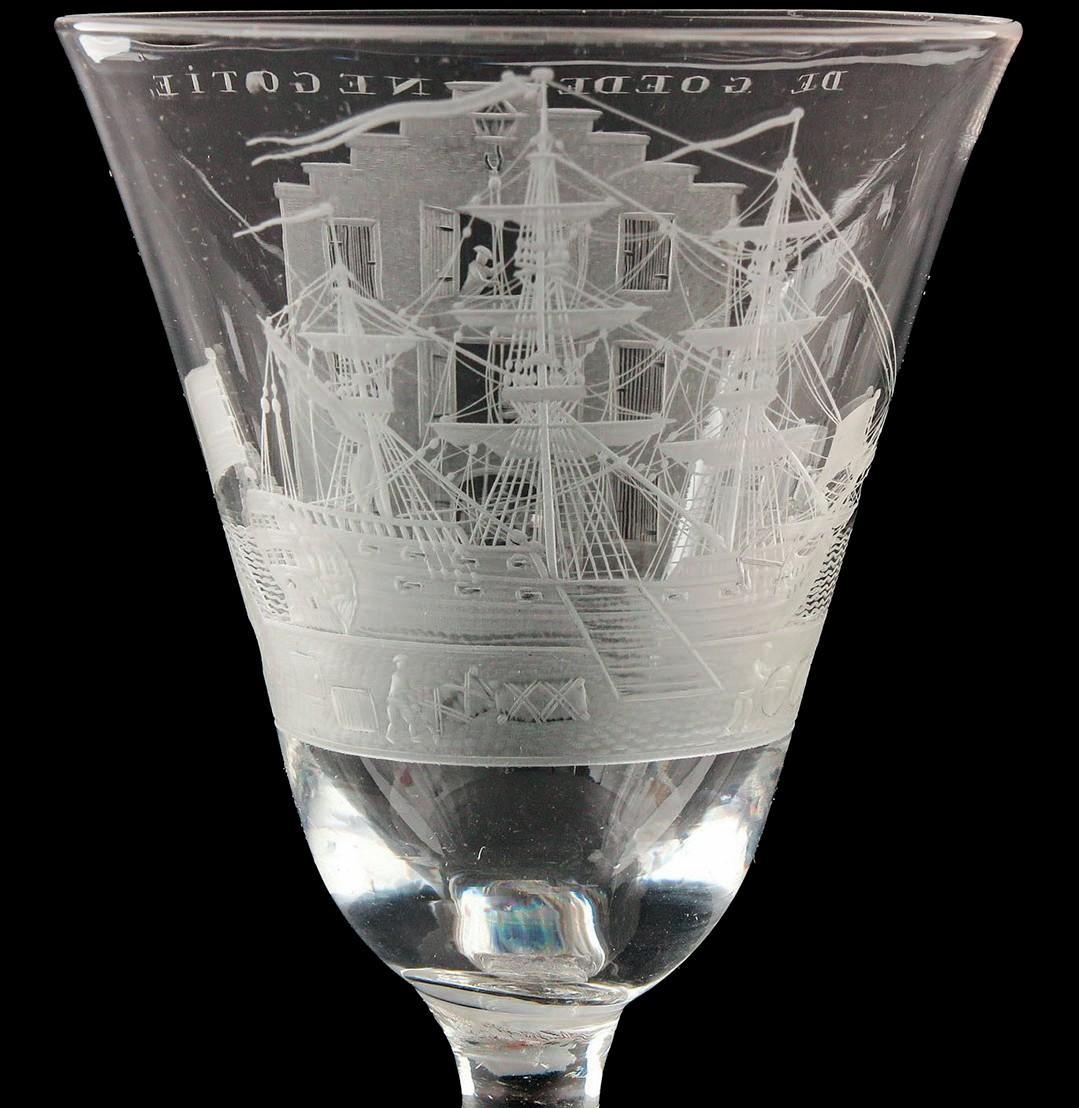
A detail of the fine Dutch engraved light-baluster goblet signed by Jacob Sang, €50,000 (£43,750) at VeilingHuis De Jager.
Estimated at €3000-6000, the 8in (20cm) light-baluster goblet signed and dated 1756 took €50,000 (£43,750) at VeilingHuis De Jager in Goes, Zeeland, on March 3.
Approximately 90 signed glasses by Sang are known, dating between 1752-83. He is thought to have left his native Saxony c.1748 and settled in Amsterdam where his superbly engraved glass, cups and goblets celebrating the achievements of the Vereenigde Oostindische Compagnie found a ready market among the merchant class.
This piece, seemingly packed away in a chest for generations, is a textbook example. Using as a canvas an imported ‘Newcastle’ light baluster goblet, it shows a detailed scene of sailors and dockworkers unloading the hold of a Dutch East Indiaman into a large warehouse.
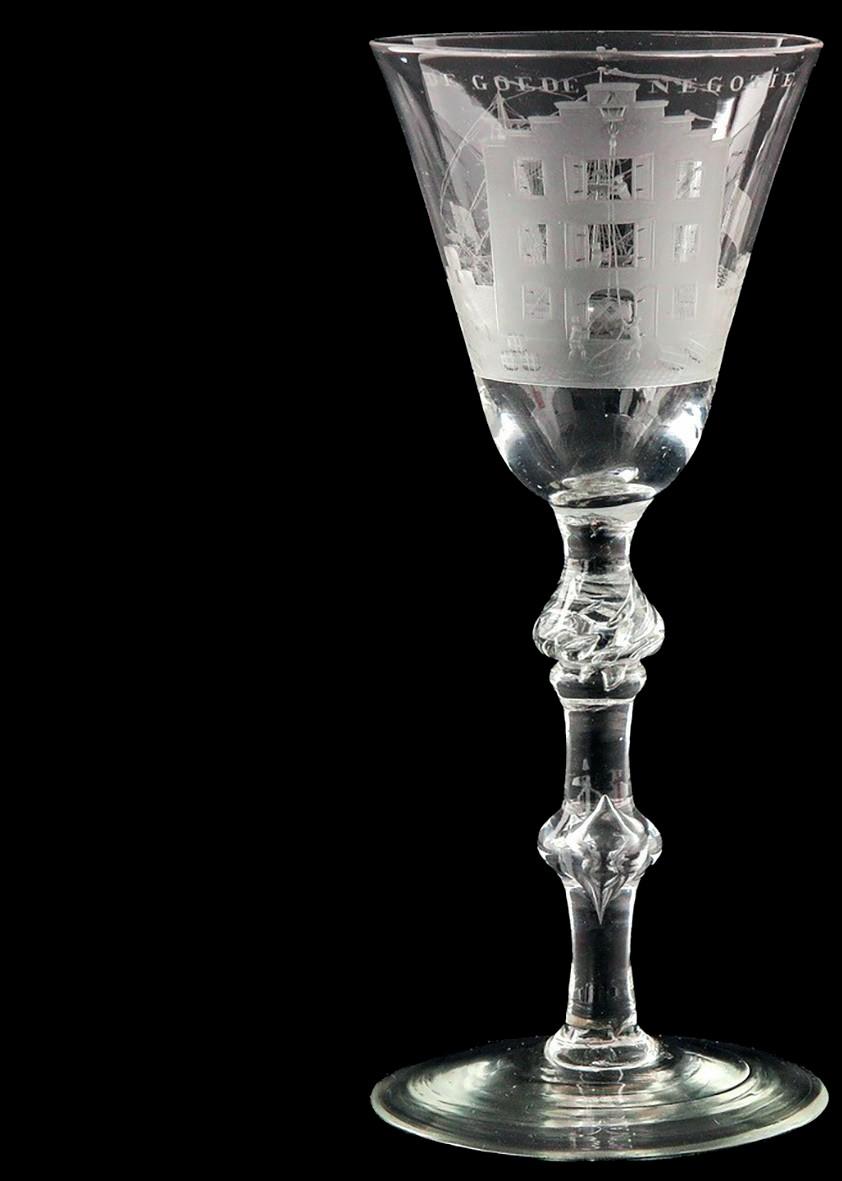
The fine Dutch engraved light-baluster goblet signed by Jacob Sang, €50,000 (£43,750) at VeilingHuis De Jager.
The inscription to the rim reads De Goede Negotie (A fair deal) while the foot is signed J Sang Fecit, Amst, 1756.
As discussed in Vind magazine in February 2026, a close inspection of the decoration to this goblet suggests the workers are handling bales of wool, cotton or silk. Textiles was one of the three pillars of the Amsterdam economy in the 1750s: grain from the Baltic states, spices and sugar from the VOC and the raw materials for cloth making from southern Europe, Asia, and North and South America.
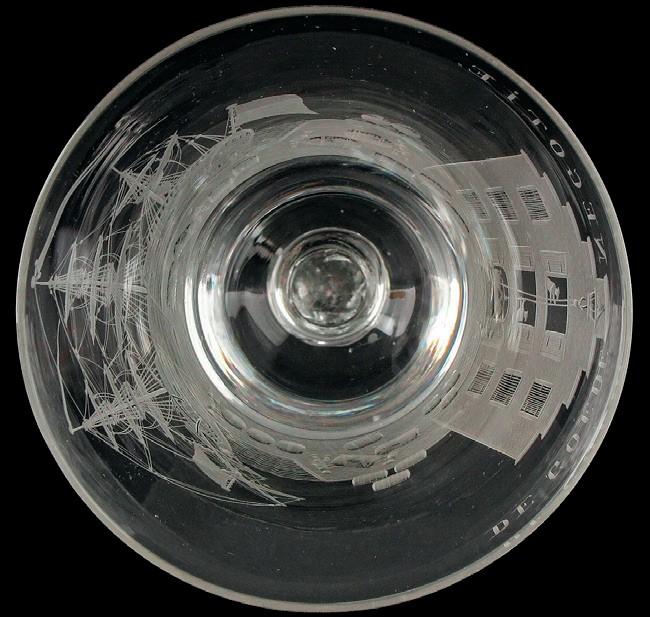
The base of the fine Dutch engraved light-baluster goblet that sold at VeilingHuis De Jager, signed by Jacob Sang.
Auctioneer Terry de Jager told ATG the discovery attracted a wide range of potential suitors. “It was a very exciting moment in the auction room. There were approximately 35 people present, with eight phone lines active, and more than 1000 bidders watching online. The buyer is based in the Netherlands and is both an avid collector and a dealer.”
Most of Sang’s surviving output is in major institutional collections – the example in the V&A is inscribed in Dutch ‘To the prosperity of the fishing around Greenland and Davis Strait’ – although two other signed pieces have appeared for sale in recent memory.
One dated 1759 and engraved with a mother and her children and the inscription ‘Everything which is dear to us’ sold for €17,000 at Christie’s Amsterdam in December 2007. Another, also dated 1759 with a view of a busy customs house and the legend
‘Trade on Land and Sea’, hammered at £20,000 at Bonhams Bond Street in June 2008. Bonhams noted at the time that while the building on this category of glasses was once said to depict the Waag or Old Customs House in Amsterdam, it does not correlate to known views. Instead, it is probably simply a stylised view designed to be representative of Amsterdam trade.