
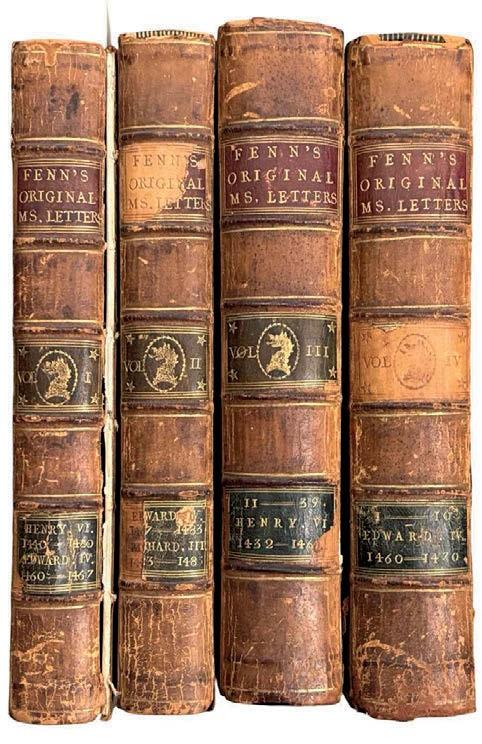
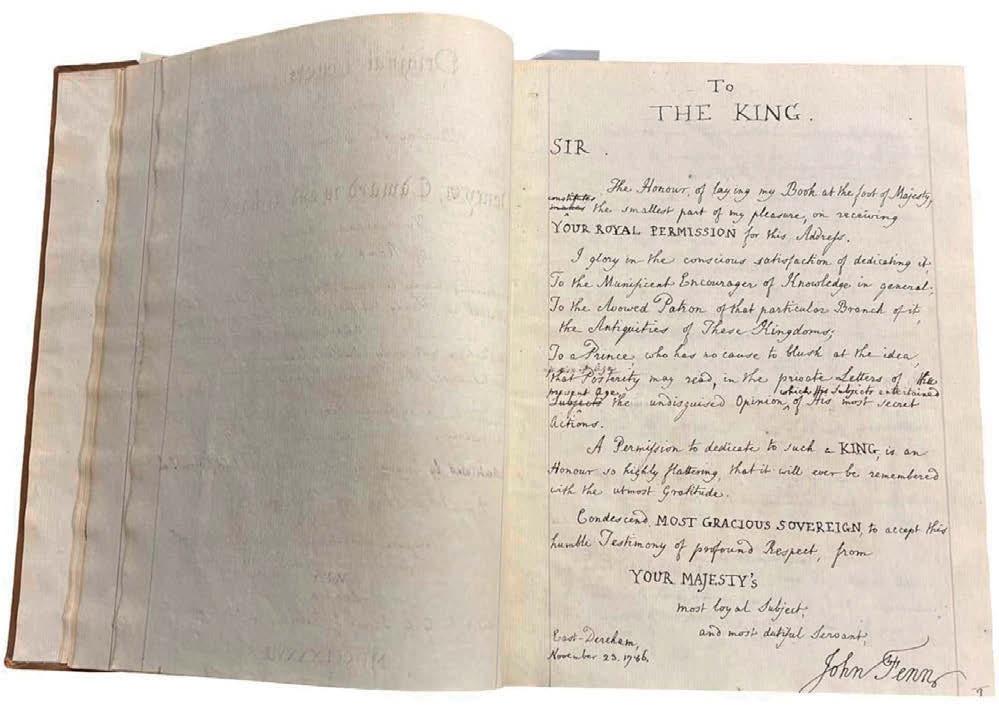

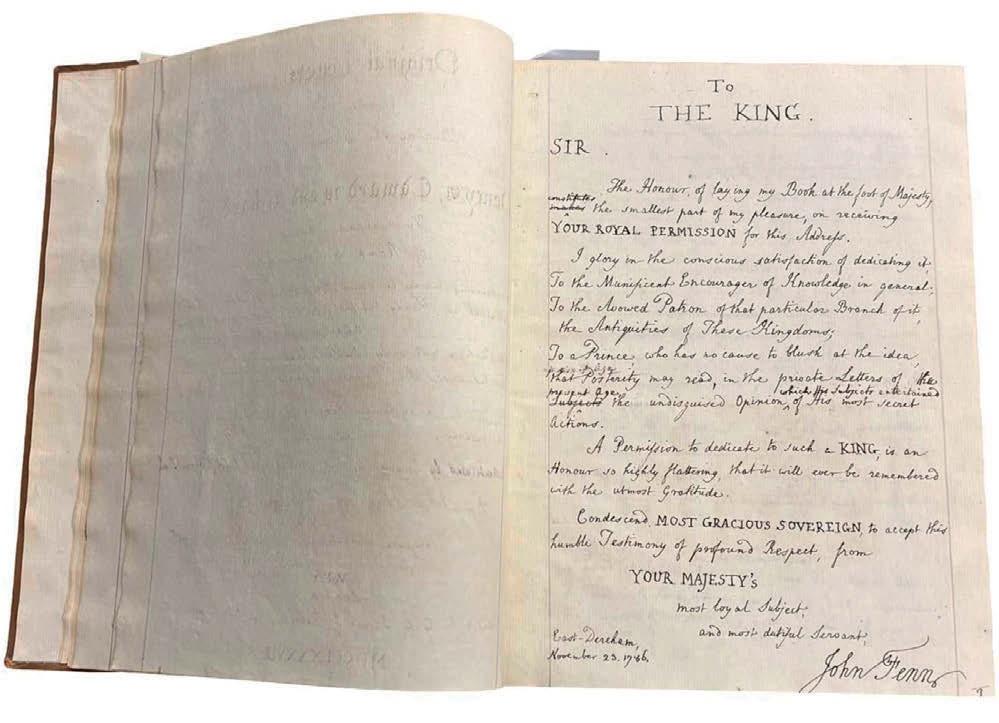
An archive comprising Sir John Fenn’s original manuscript copies of the Paston family letters sold for £8400 in Norfolk on October 8.
The volumes came for sale at Keys (25% buyer’s premium) in Aylsham by descent from Fenn’s nephew William Frere.
John Fenn (1739-94) of East Dereham and William Frere (1775-1836), the first Master of Downing College, Cambridge, are both key to the story of the publication of the Paston Letters that shed so much light on life in England during the Wars of the Roses.
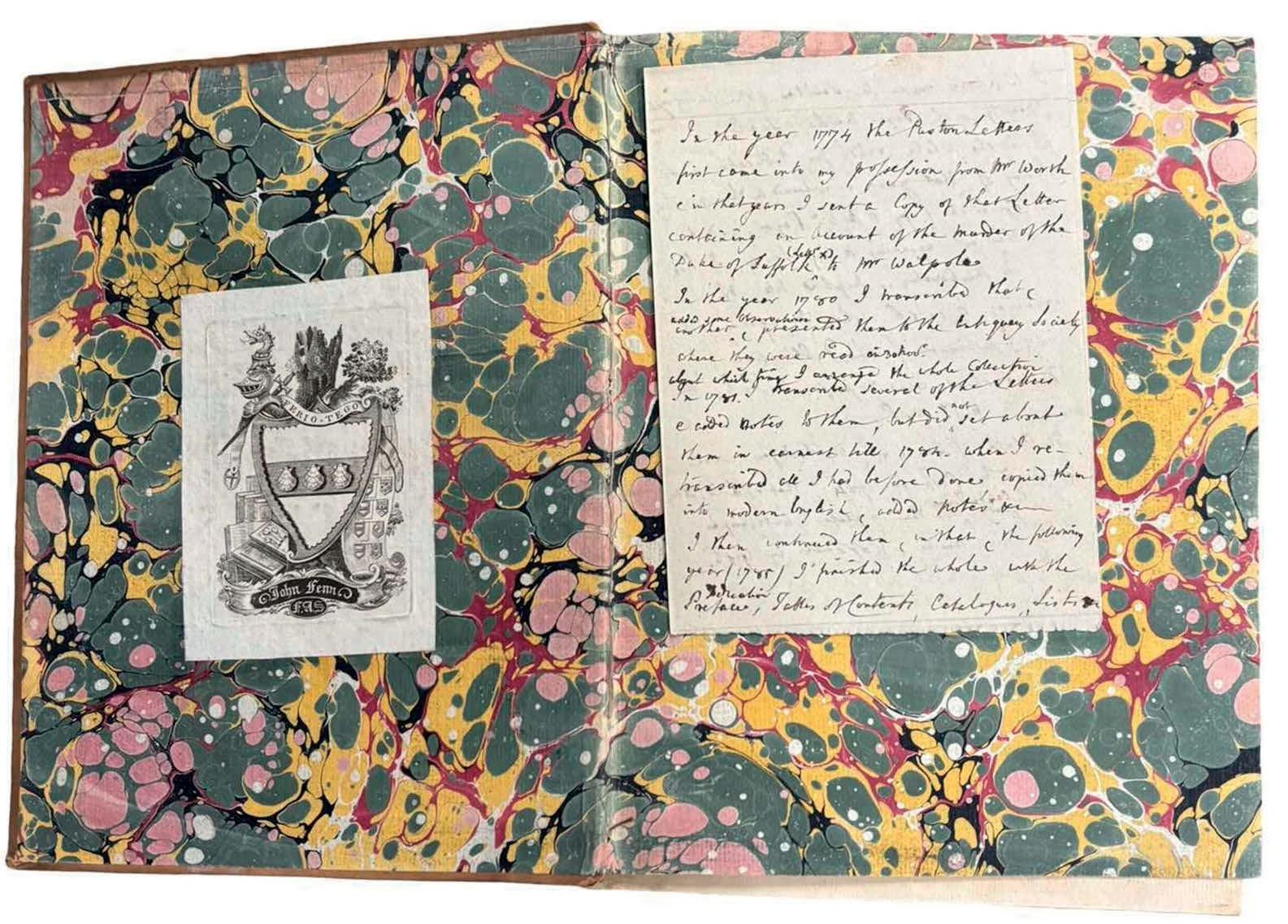
Sir John Fenn’s original manuscript copies of the Paston family letters, sold for £8400 at Keys.
Antiquarian’s acquisition
The bulk of the papers – dating from 1422-1509 – were ‘discovered’ in 1735 at Oxnead Hall, the Paston family seat in north Norfolk, shortly after the last of the family line, William Paston, 2nd Earl of Yarmouth, had died in 1732.
They were first acquired by the local antiquarian Francis Blomefield (1705-52).
As Fenn recalls in a note pasted into the first of these four volumes, he had purchased the letter 39 years later from the executors of John Worth, a chemist and antiquary from Diss.
He writes: “In the year 1774 the Paston Letters first came into my possession from Mr Worth and in that year, I sent a copy of a letter containing an account of the murder of the Duke of Suffolk [on May 2, 1450] to Mr Walpole.”
Fenn believed the correspondence of a gentrified local family offered something new to contemporary understanding of 15th century
England. While he chose to concentrate on letters relating to ‘great’ events and ‘great’ men, he understood the more mundane thoughts and reflections could also be compelling ‘history’.
He wrote: “The sufferings of warriors, the distresses of private life, occasioned by so tempestuous a season, and the concise rapidity of the narratives, will present a truer picture of that turbulent period than could be exhibited by the artful pencil of a sedate historian.”
In time, the content has also proved invaluable as a record of changing handwriting styles, watermarks and paper production and the evolution of the English language during the period known as the Great Vowel Shift.
Fenn’s first two-volume edition of the earliest letters, published by Robinsons of Paternoster Row, London, in 1787, was properly titled Original Letters written during the reigns of Henry VI, Edward IV and Richard III by various persons of rank or consequence, containing many curious anecdotes relative to that turbulent and bloody, but hitherto dark period of our history. The first edition sold out in a week.
Keys’ archive, estimated at £400-500, amounts to Fenn’s manuscript notes together with the drawings and coloured engravings that appear in the first two volumes. To one page is the corrected draft of a fawning dedication to George III. At the time, Fenn also presented the king with some of the original 15th century letters and was quickly rewarded with a knighthood.
Fenn published two further tranches of the Paston Letters in 1789 and before he died had prepared a fifth. In retirement, William Frere edited this final volume and oversaw its printing by John Murray in 1823. Frere’s family inherited many of the original letters. When, later in the 19th century some were declared lost – and doubt cast on their authenticity in an 1865 copy of Fortnightly Review – they subsequently turned up across residences belonging to his descendants.
Somehow the letters presented to George III had reached Orwell Park in Ipswich.
Keys’ catalogue also included Frere’s personal copies of all five published volumes of the Paston Letters. The first two (second editions) bore the bookplates of his uncle with the later volumes carrying his own bookplate. These sold to the same private buyer at £720.
Most of the Paston Letters and associated documents are now in the British Library, with other tranches in the Bodleian Library and Magdalen College in Oxford and a few at Pembroke College in Cambridge.
Hobbit owned by fellow author
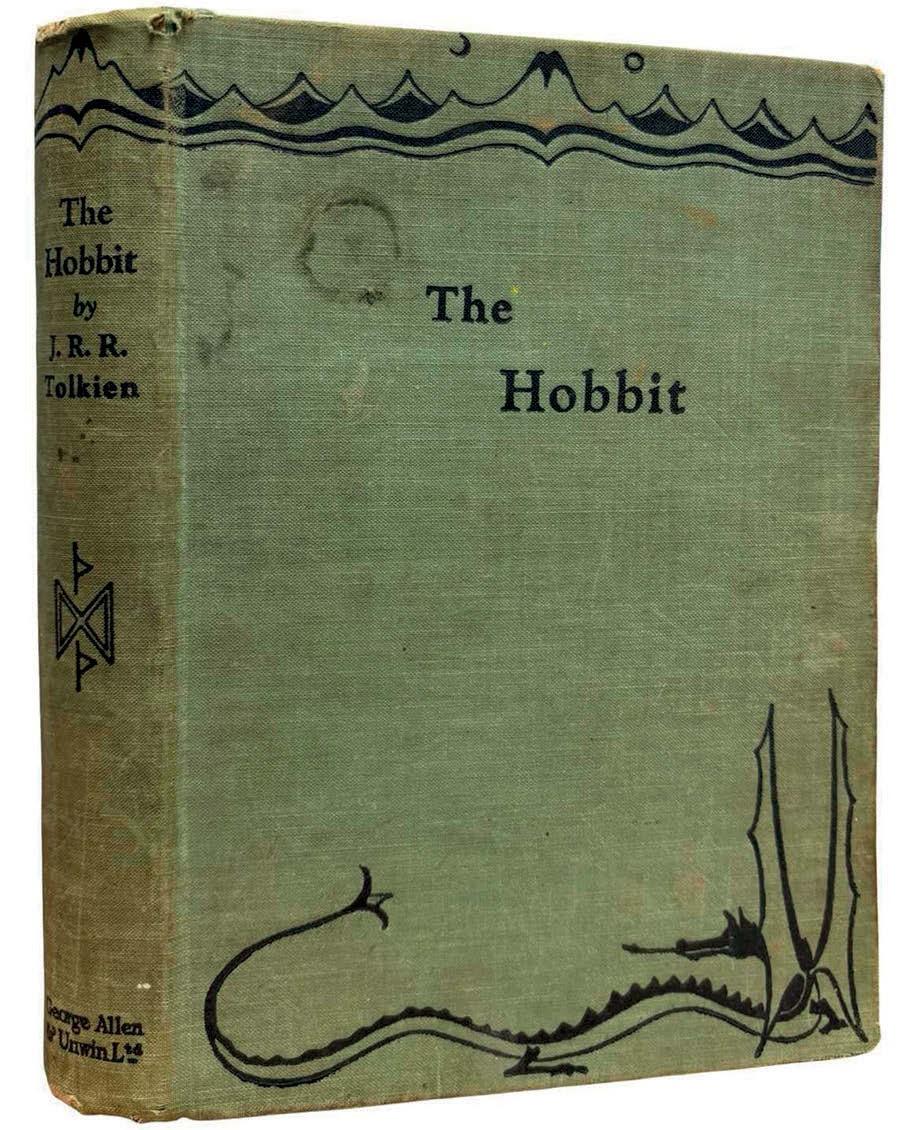
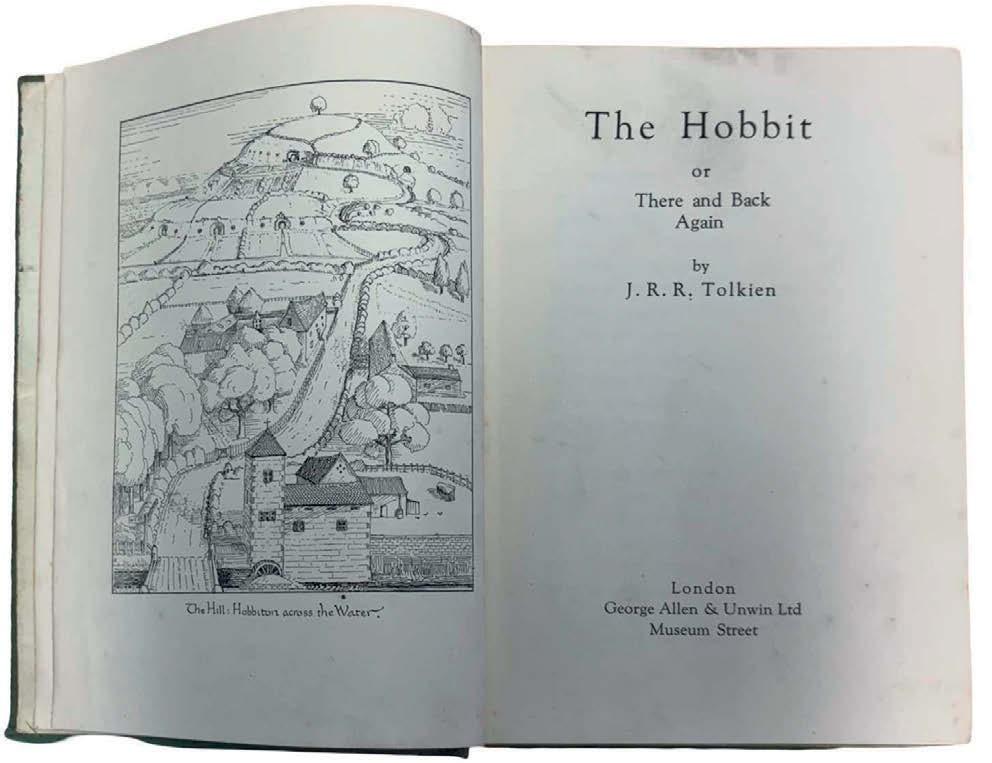
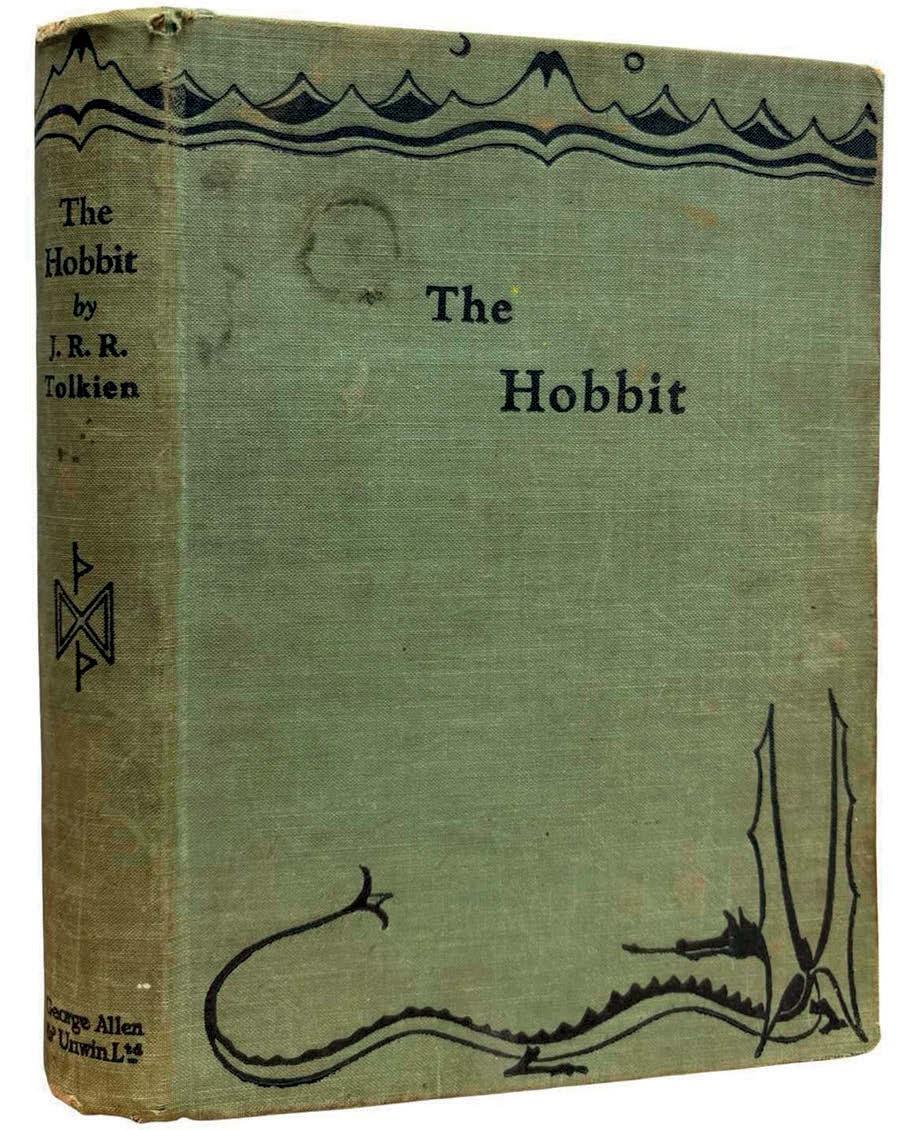
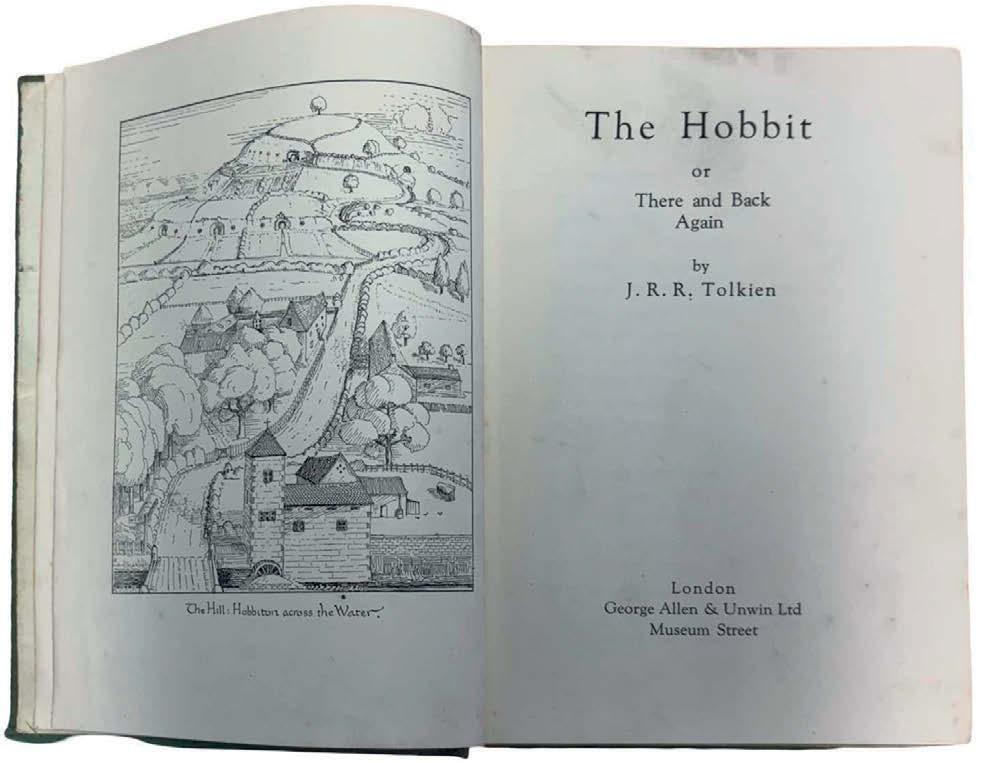
A first edition, first impression of JRR Tolkien’s The Hobbit sold at the top estimate of £12,000 in the same Keys auction.
Lacking the dust jacket, this was one of just 1500 copies printed for the initial run, and came from the estate of Richard Hughes OBE (1900-76), author of A High Wind in Jamaica (1929).